Uncategorized

smart home automation

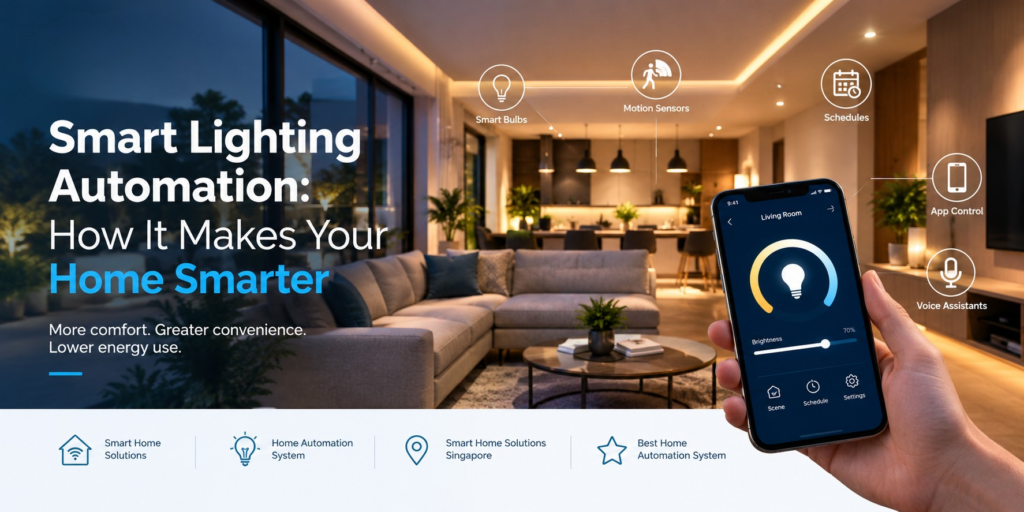
Smart Lighting Automation: How It Makes Your Home Smarter

Introduction Imagine your lights switching on automatically when you arrive home, dimming when you watch a movie, and turning off when a room is empty. This is the convenience of smart lighting automation. Smart lighting automation allows you to control lighting using smart switches, dimmers, sensors, smartphone apps, and voice assistants. By adjusting lighting according to your daily routine, occupancy, and natural daylight, you can create a more comfortable, convenient, and energy-efficient home. As demand for smart home solutions continues to grow, intelligent lighting has become an essential feature of modern homes. What Is Smart Lighting Automation? Smart lighting automation uses connected devices and intelligent controls to manage your home’s lighting automatically. Unlike traditional lighting, which requires manual operation, automated lighting responds to schedules, sensors, and predefined settings. A smart lighting system may include: Whether you want to automate a single room or integrate lighting throughout your property, the right home automation system can make everyday living simpler. How Smart Lighting Makes Your Home Smarter Smart lighting offers more than remote control. It allows different lighting functions to work together according to your lifestyle. Remote and Voice Control Control your lights using a smartphone app or compatible voice assistants such as Amazon Alexa, Google Assistant, and Apple Siri. You can switch lights on or off, adjust brightness, and activate lighting scenes without operating individual switches. Automatic Lighting Control With sensors and programmed schedules, your lights can respond automatically to everyday activities. For example, entrance lights can switch on after sunset, hallway lights can activate when motion is detected at night, and selected lights can turn off when everyone leaves home. Personalised Lighting Scenes Create customised lighting scenes for different occasions. A movie scene can dim the living room lights, while a reading scene provides suitable brightness for focused activities. You can also schedule bedroom lighting to brighten gradually in the morning or dim in the evening. Integration with Other Smart-Home Systems Smart lighting can work with compatible security systems, motorised blinds, climate control, and other connected devices. This integration helps create a more coordinated and convenient home environment. How Smart Lighting Improves Comfort and Saves Energy Intelligent lighting helps you create the right atmosphere while reducing unnecessary electricity consumption. Improved comfort: Adjust brightness and colour temperature according to your activities, from bright task lighting in the kitchen to warm, dimmed lighting in the living room. Reduced energy waste: Motion sensors and occupancy detection help prevent lights from remaining on unnecessarily. Daylight optimisation: Compatible lighting controls can dim artificial lights when sufficient natural daylight is available. Automated schedules: Set lighting to operate according to your daily routine, sunrise, or sunset. Convenient night-time lighting: Motion-activated lights can illuminate hallways and bathrooms at a lower brightness during the night. Actual energy savings depend on your lighting equipment, household habits, and automation settings. Combining energy-efficient LED lighting with properly configured controls can help improve overall efficiency. Smart Lighting Ideas for Every Room Smart lighting can be customised to suit the purpose of each space. Area Smart Lighting Application Living room Create scenes for entertainment, relaxation, and everyday activities. Bedroom Automate morning lighting and bedtime dimming. Kitchen Combine bright task lighting with softer evening illumination. Hallways Use motion sensors to activate lights when needed. Bathroom Install suitable motion-activated night lighting. Entrance and porch Schedule lights around sunset and arrival times. Garden and outdoor areas Automate selected lights for convenience and visibility. These applications make lighting more responsive to your needs while reducing the effort required for everyday control. Choosing the Right Home Automation System Selecting the right lighting solution depends on your property, existing electrical infrastructure, budget, and future requirements. Smart bulbs may suit smaller installations, while smart switches and dimmers provide control over compatible lighting circuits. For larger homes, an integrated lighting control system can coordinate multiple circuits, sensors, and lighting scenes through a centralised platform. Before choosing a system, consider: For homeowners exploring smart home solutions Singapore, professional planning can help ensure that lighting controls integrate effectively with the property’s wider automation requirements. The best home automation system is one that meets your needs, provides reliable control, and can adapt as your requirements change. Why Choose JIP Technology for Smart Lighting Automation? At JIP Technology, we provide smart-home and building automation solutions designed to improve convenience, control, and energy efficiency. Our expertise includes intelligent lighting control and integration with compatible automation technologies. From lighting scenes and dimming to sensor-based automation and integrated control systems, we help create solutions tailored to the requirements of each project. Whether you are upgrading an existing property or planning a new installation, the right lighting control strategy can make your home more comfortable, efficient, and connected. Conclusion Smart lighting automation transforms everyday lighting into an intelligent system that responds to your lifestyle. With automated schedules, occupancy sensors, personalised scenes, and integrated controls, you can improve comfort, simplify daily routines, and reduce unnecessary energy consumption. Start with one room, introduce a few useful automation routines, and expand as your needs evolve. Ready to make your home smarter? Contact JIP Technology to explore smart lighting automation and integrated smart-home solutions tailored to your needs.

Smart Lighting Automation: How It Makes Your Home Smarter Read More »
Smart Home Automation Systems

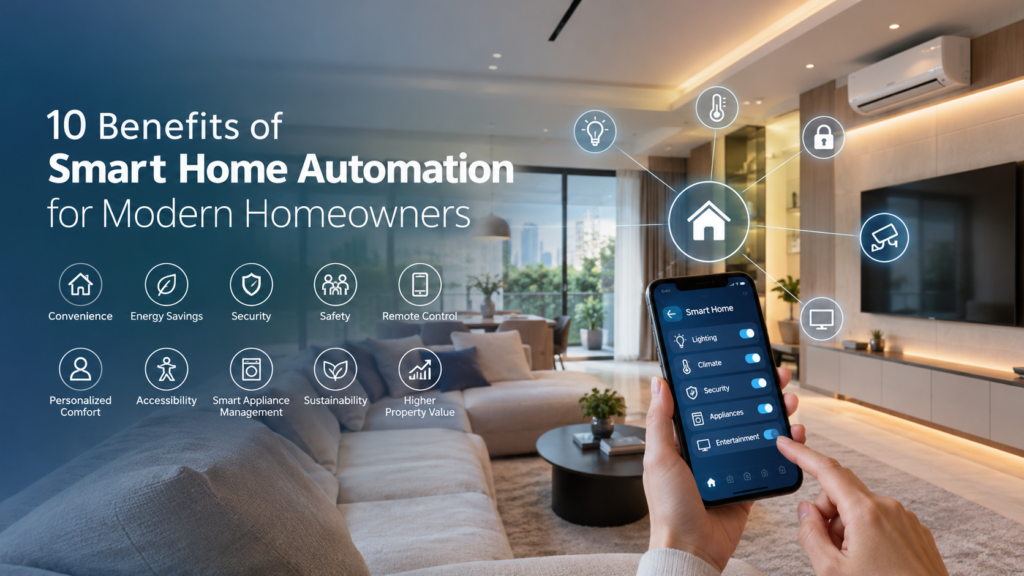
10 Benefits of Smart Home Automation for Modern Homeowners

Introduction Smart home automation uses connected devices and intelligent control systems to manage lighting, air conditioning, security, appliances, and entertainment. With a smart home system, homeowners can control multiple functions through a mobile app, voice command, or automated schedule. From improving everyday convenience to reducing energy waste, smart home automation offers practical benefits for modern living. Whether you are building a new home or upgrading an existing property, the right smart home solutions can make your living space more comfortable, secure, and efficient. Here are 10 key benefits of smart home automation and how it can improve your lifestyle. 1. Greater Convenience and Time Savings Smart home automation simplifies everyday tasks by allowing you to control multiple devices from one interface. You can switch off lights, adjust air conditioning, close motorized curtains, and activate security settings with a single command. Automated routines, such as morning and bedtime scenes, reduce the need for manual operation and make daily living more convenient. 2. Lower Energy Bills Smart home automation helps reduce unnecessary electricity consumption through scheduled lighting, occupancy sensors, and intelligent climate control. A smart home lighting system can automatically switch off lights in unoccupied rooms and adjust brightness according to your needs. Automated air conditioning schedules can also help prevent energy waste when rooms are not in use. These features support more efficient energy management and may help lower household electricity bills. 3. Improved Home Security Protect your home with integrated smart locks, security cameras, video doorbells, motion sensors, and alarm systems. Receive notifications when unusual activity is detected and monitor your property remotely through compatible applications. You can also create Away Mode routines that activate security devices and control selected lights when you leave home, providing greater peace of mind. 4. Enhanced Safety for Family and Property Smart safety devices can help detect potential hazards before they become serious problems. Smoke detectors, carbon monoxide alarms, and water-leak sensors can provide alerts when abnormal conditions are detected. For example, a water-leak sensor near a washing machine can notify you of a leak, allowing you to respond quickly and reduce potential damage. 5. Remote Control From Anywhere Manage your home even when you are away. With a compatible smart home system, you can switch lights on or off, adjust temperature settings, check security cameras, and control supported devices using your smartphone. Remote access makes it easier to manage your home while travelling, at work, or away for the day. Internet connectivity and compatible services may be required for these features. 6. Personalized Comfort Create customized scenes that match your daily routines and preferences. A Movie Night scene can dim the lights and close the curtains, while a Good Morning scene can activate selected lights and adjust other connected devices. By integrating lighting, climate control, and motorized curtains, smart home solutions create a personalized living environment that adapts to your lifestyle. 7. Better Accessibility and Independent Living Smart home automation can make everyday activities easier for elderly residents and people with limited mobility. Voice commands, centralized controls, and automated lighting reduce the need to operate individual switches manually. Motion-activated lights can illuminate hallways at night, while compatible emergency alerts and sensors can provide additional support for independent living. 8. Smarter Appliance and Maintenance Management Compatible smart appliances, plugs, and energy monitors can help homeowners track energy consumption and identify unusual usage patterns. Some connected devices also provide maintenance reminders and fault notifications. These features improve visibility into household operations and help homeowners manage equipment more effectively. 9. Eco-Friendly and Sustainable Living Smart home automation supports sustainable living by reducing unnecessary energy use. Occupancy-based lighting, scheduled climate control, and intelligent energy monitoring help households use electricity more efficiently. A well-designed smart home lighting system can combine dimming, scheduling, and sensor-based control to provide suitable lighting while minimizing waste. 10. Increased Property Value and Buyer Appeal Modern homebuyers may appreciate properties equipped with convenient lighting control, integrated security, climate management, and other automation features. A professionally installed smart home system can enhance the overall living experience and make a property more appealing to buyers who value technology, comfort, and energy efficiency. However, the impact on resale value depends on market conditions and buyer preferences. How to Get Started With Smart Home Automation Getting started does not require automating your entire home at once. Follow these steps to build a system that suits your needs. For homeowners exploring smart home solutions Singapore, choosing a provider experienced in lighting control and building automation can help create a system tailored to the property and its requirements. Frequently Asked Questions Is smart home automation expensive? Costs depend on the devices, property size, and level of integration. You can begin with essential functions and expand your system gradually as your needs and budget allow. Do smart homes work without the internet? Some systems support local control and programmed automation without internet access. However, remote access and certain cloud-based features usually require an internet connection. Are smart homes secure? Smart homes can be protected by using strong passwords, regular software updates, secure networks, and trusted devices. Security also depends on correct installation and configuration. What is the best first smart home device? Smart lighting is a practical starting point for many homeowners because it offers convenient scheduling, dimming, and scene control. The best choice depends on your priorities and existing electrical setup. Are wired or wireless smart home systems better? Wireless systems can be convenient for existing homes, while wired systems may be suitable for new builds and major renovations. The best option depends on installation requirements, reliability, compatibility, and future expansion plans. Conclusion Smart home automation offers practical benefits, including greater convenience, improved security, personalized comfort, and more efficient energy management. From automated lighting to integrated climate and security control, the right technology can transform the way you interact with your home. Whether you are planning a new installation or upgrading an existing property, carefully selected smart home solutions can help create a comfortable, efficient, and future-ready living environment.

10 Benefits of Smart Home Automation for Modern Homeowners Read More »

Smart Home Automation

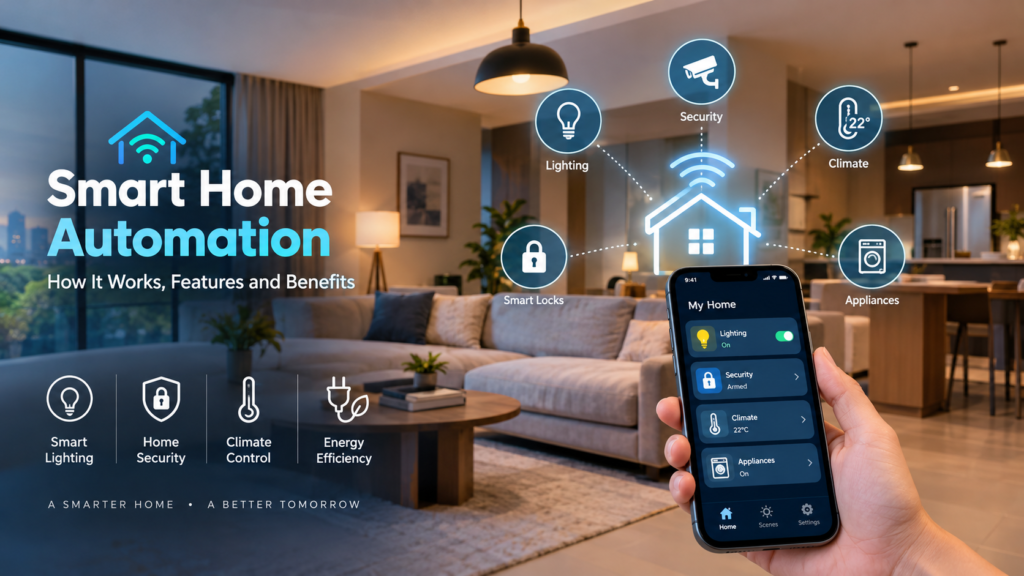
Smart Home Automation: How It Works, Features and Benefits

Smart Home Automation: Features, Benefits & How It Works Modern homes are becoming more connected and intelligent. From lights that switch on automatically to security cameras that send alerts to your phone, smart technology is changing everyday living. Smart home automation connects devices, sensors, and control systems to manage different functions of a home. Lighting, security, climate control, and appliances can be controlled through mobile apps, voice commands, schedules, or automated routines. Whether you want greater convenience, improved security, better energy management, or increased comfort, smart home solutions can help create a more connected and efficient living environment. What Is Smart Home Automation? Smart home automation uses connected devices, sensors, software, and control systems to monitor and manage different functions within a home. Instead of manually controlling every device, homeowners can create automated routines based on schedules, sensors, location, or preferences. A basic smart device could be a smart bulb or smart lock. A connected home brings multiple devices together through an app, hub, or voice assistant. A fully automated smart home system allows devices to communicate and perform actions automatically. For example, lights can turn on when motion is detected, doors can lock automatically at night, curtains can close at sunset, and the thermostat can adjust when nobody is home. Remote control and automation are different. Remote control allows users to operate a device manually from another location, while automation allows devices to perform tasks automatically based on predefined conditions. How Does Smart Home Automation Work? A smart home automation setup combines connected devices, a home network, sensors, a control platform, and automation rules. Connected Devices These can include smart lights and switches, plugs, thermostats, air conditioners, security cameras, video doorbells, smart locks, leak detectors, and connected appliances. Home Network Devices communicate through technologies such as Wi-Fi, Bluetooth, Zigbee, Z-Wave, or Matter-supported connections. A reliable network is important for consistent device performance. Control Platform A mobile app, hub, voice assistant, or touchscreen can provide centralized control. Users can add devices, create schedules, monitor activity, and set automation routines. Sensors and Automation Rules Sensors detect motion, temperature, light levels, door or window status, smoke, or water leaks. These inputs can trigger automated actions. For example: If motion is detected after sunset, the hallway lights turn on. This simple “if this happens, then do that” approach is the foundation of home automation. Key Features of Smart Home Automation Smart Lighting A smart home lighting system allows users to control lights remotely, adjust brightness, create scenes, and schedule lighting according to daily routines. Motion and daylight sensors can also switch lights on or off automatically. For example, lights can turn on when someone enters a room and switch off when the room is empty. Smart Home Security Smart cameras, video doorbells, smart locks, door sensors, and motion detectors can improve home monitoring. Users can receive real-time alerts, check cameras remotely, and control locks through their phones. Automated routines can also activate security devices when residents leave the property. However, smart security should complement good security practices rather than replace them. Smart Climate Control Smart thermostats and connected air-conditioning systems can follow schedules, detect occupancy, and allow temperature adjustments remotely. For homes in Singapore, this can help homeowners manage cooling according to occupancy and daily routines. Voice Control Voice assistants can provide hands-free control of compatible devices. Users can turn off lights, adjust temperatures, lock doors, or check cameras using voice commands. Privacy settings should be reviewed when using voice-enabled devices. Smart Appliances and Energy Monitoring Connected washing machines, refrigerators, ovens, coffee makers, and robot vacuum cleaners can provide scheduling, monitoring, and notification features. Smart plugs and energy dashboards can also help homeowners track electricity consumption and identify unnecessary energy use. Benefits of Smart Home Automation Greater Convenience Multiple devices can be controlled from one platform, while automated morning, evening, and bedtime routines reduce repetitive tasks. Improved Security Smart cameras and sensors can provide alerts about motion, open doors, or unusual activity. Remote monitoring allows homeowners to stay connected to their property even when they are away. Better Energy Efficiency Automation can switch off unused lights and appliances and adjust cooling when rooms are empty. However, energy savings depend on the devices, settings, property, and user behavior. Increased Comfort Homeowners can personalize lighting, temperature, curtains, entertainment, and other functions for working, relaxing, sleeping, or entertaining. Improved Accessibility Voice commands, mobile apps, sensors, and centralized controls can make everyday functions easier to operate, particularly for older adults and people with mobility limitations. Smart Home Automation in Everyday Life Smart home automation becomes more useful when different devices work together. Morning: Bedroom lights gradually turn on, curtains open, the thermostat adjusts, and a coffee maker starts at a scheduled time. Leaving home: Selected lights and appliances switch off, doors lock, security systems activate, and the thermostat moves to an energy-saving setting. Evening: Outdoor lights turn on around sunset, curtains close, and indoor lighting changes to a softer setting. Vacation: Lights operate on schedules, cameras remain active, and water-leak sensors continue monitoring the property while important alerts are sent to the homeowner. How to Start a Smart Home You do not need to automate your entire home immediately. Start with one specific need, such as security, lighting, comfort, or energy management. Choose compatible products that work with the same platform, hub, voice assistant, or communication standard. Starting with two or three devices, such as smart bulbs, plugs, motion sensors, or a camera, allows you to test the system before expanding. Reliable Wi-Fi coverage is also important. Larger homes may benefit from a suitable router or mesh network. If you are exploring a smart home system Singapore homeowners can use, consider the property’s layout, connectivity, lifestyle requirements, and future expansion before selecting a system. Challenges and Safety Considerations Smart home technology requires attention to privacy, cybersecurity, compatibility, cost, and reliability. Use strong and unique passwords, enable multi-factor authentication where available, update device software, and purchase products from reputable manufacturers. Devices from different brands may not always

Smart Home Automation: How It Works, Features and Benefits Read More »

Smart Home Automation in Singapore

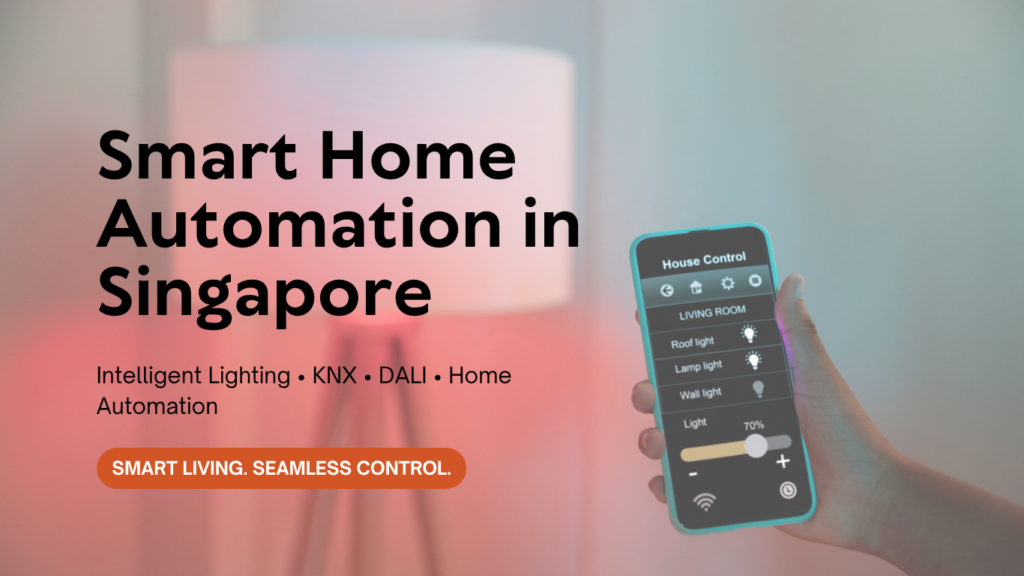
Smart Home Automation in Singapore: Intelligent Lighting Control & Seamless Home Integration

1. Introduction: Smart Living in Singapore Smart home automation is transforming how homeowners in Singapore experience comfort, convenience, and energy efficiency. Imagine returning home after a long day. Your lights automatically illuminate, the air conditioning adjusts to your preferred temperature, and your curtains close with a single touch. With a professionally designed smart home system in Singapore, these everyday experiences become possible through intelligent automation. From HDB flats and condominiums to luxury landed properties, smart home technology allows homeowners to manage lighting, air conditioning, curtains, and entertainment through one integrated control system. 2. What Is a Smart Home Automation System? A home automation system connects household electrical and electronic devices, allowing them to communicate and operate together. Instead of controlling every device separately, homeowners can manage multiple functions through smart switches, touch panels, smartphone applications, or compatible voice assistants. A complete smart home system can integrate: For example, activating a “Good Night” scene can automatically switch off selected lights, close the curtains, and adjust the bedroom air conditioning. The objective is simple: create a comfortable, convenient, and responsive living environment. 3. Intelligent Lighting Control: The Heart of a Smart Home Lighting is one of the most important elements of a modern home. It influences comfort, interior design, and energy consumption. A traditional lighting system provides basic ON/OFF functionality, while a smart home lighting system offers greater flexibility through intelligent dimming, personalised scenes, and automated control. Key Smart Lighting Features Dimming Control: Adjust lighting brightness according to your activities and preferences. Lighting Scenes: Create customised settings such as Good Morning, Movie Mode, Dining Mode, and Good Night. Motion Sensors: Automatically activate lighting when movement is detected and switch it off when an area is unoccupied. Daylight Harvesting: Adjust artificial lighting according to available natural daylight. Smartphone Control: Manage compatible lighting devices through a convenient mobile application. KNX and DALI Lighting Control For professional smart home automation, KNX and DALI are two important technologies. KNX Smart Home Automation is an internationally standardised technology that integrates lighting, air conditioning, curtains, sensors, and other compatible building functions into one coordinated system. DALI Lighting Control allows compatible LED drivers to be individually addressed, grouped, dimmed, and controlled through software. By integrating KNX with DALI through a suitable gateway, homeowners can achieve flexible lighting scenes and seamless coordination with other smart home functions. This combination is particularly suitable for luxury condominiums and landed properties in Singapore seeking an advanced smart home lighting system. 4. Seamless Home Integration: Beyond Lighting A complete smart home system goes beyond intelligent lighting. The real advantage of home automation comes from integrating multiple household functions into one convenient platform. Air Conditioning Control Manage compatible air conditioning units, adjust temperatures, and create automated schedules through the home automation system. Motorised Curtains and Blinds Automatically open or close curtains using smart switches, touch panels, or personalised lighting scenes. Security and Access Control Integrate compatible CCTV cameras, video intercoms, smart locks, and security systems for convenient monitoring and control. Multi-Room Audio Enjoy music throughout your home with integrated audio systems that allow different rooms to play individual or shared music sources. With proper integration, homeowners can manage these functions through a centralised interface instead of using multiple applications and remote controls. 5. Benefits of Installing a Smart Home System in Singapore Investing in a professionally designed smart home system offers several practical advantages. Benefit Description Convenience Control multiple household functions through a single command. Energy Efficiency Reduce unnecessary lighting and air conditioning operation. Personalised Comfort Create customised lighting, temperature, and curtain settings. Modern Design Reduce the need for multiple wall switches and separate controls. Remote Access Monitor and control supported devices while away from home. Future Expansion Add compatible automation functions as your requirements change. A well-designed smart home should simplify everyday living while maintaining reliable and convenient operation. 6. How to Choose the Best Home Automation System in Singapore Finding the best home automation system Singapore homeowners can install depends on several factors, including property type, renovation stage, budget, and desired functionality. Different properties require different automation approaches. HDB Flats: Wireless smart lighting, selected motion sensors, and basic automation can provide useful functionality with limited modifications to existing electrical infrastructure. Condominiums: Integrated lighting, motorised curtains, air conditioning, and centralised touch panels can create a personalised living environment. Landed Properties: A complete KNX and DALI home automation system can coordinate lighting, climate control, curtains, security, and entertainment across multiple floors. When selecting a smart home system in Singapore, homeowners should consider system compatibility, reliability, future expansion, and professional installation support. The right solution should match your lifestyle while providing flexibility for future upgrades. 7. Smart Home Installation and Commissioning A successful smart home installation begins with proper planning and professional system design. The typical process includes: For new homes and major renovations, planning the automation system early can help minimise unnecessary modifications and additional installation costs. 8. Frequently Asked Questions What is the best smart home lighting system for Singapore homes? The most suitable solution depends on the property type and required functionality. KNX and DALI are options for professionally integrated lighting control, while wireless systems can be practical for selected retrofit installations. Can I install smart lighting without rewiring my home? Yes. Certain wireless smart lighting systems can be installed with limited modifications to existing wiring, depending on the electrical conditions and selected equipment. Can KNX control air conditioning and curtains? Yes. KNX can integrate compatible air conditioning systems and motorised curtains through suitable gateways and control interfaces. Can a smart home system work without internet? Many locally controlled KNX automation functions can continue operating without internet connectivity. However, remote access and certain cloud-based services may require an active internet connection. How much does a smart home automation system cost in Singapore? The cost depends on property size, number of lighting points, selected technology, equipment brands, and integration requirements. A professional site survey is recommended for an accurate quotation. Conclusion: Transform Your Home with Intelligent Automation A smart home is more than

Smart Home Automation in Singapore: Intelligent Lighting Control & Seamless Home Integration Read More »

A contemporary office desk setup with laptops, gadgets, and accessories, creating a tech-savvy workplace.

Smart Homes: More Than a Trend 3

Welcome to WordPress. ThisSmart home automation is no longer just for tech lovers—it’s a lifestyle upgrade that blends comfort, safety, and efficiency into your daily routine. From lighting to climate control, everything can now be managed with a touch, a voice command, or even automatically based on your habits. Comfort & Convenience Wake up to lights gently turning on, blinds opening, and your coffee brewing—automatically. Smart tech adapts to your lifestyle, giving you seamless control and a home that truly responds to your needs. Save Energy, Save Money Smart systems like automated lighting and climate control ensure energy is only used when needed. Over time, these savings add up—especially in larger homes or commercial spaces. Smart Security Stay protected with features like remote locks, video doorbells, motion sensors, and live camera access. Whether you’re at home or away, you stay in control. Flexible & Future-Ready With systems like KNX, Zigbee, or Z-Wave, you can start small and expand as your needs grow. Smart homes are built to evolve with you. is your first post. Edit or delete it, then start writing!

Smart Homes: More Than a Trend 3 Read More »

A contemporary office desk setup with laptops, gadgets, and accessories, creating a tech-savvy workplace.

Smart Homes: More Than a Trend 1

Welcome to WordPress. ThisSmart home automation is no longer just for tech lovers—it’s a lifestyle upgrade that blends comfort, safety, and efficiency into your daily routine. From lighting to climate control, everything can now be managed with a touch, a voice command, or even automatically based on your habits. Comfort & Convenience Wake up to lights gently turning on, blinds opening, and your coffee brewing—automatically. Smart tech adapts to your lifestyle, giving you seamless control and a home that truly responds to your needs. Save Energy, Save Money Smart systems like automated lighting and climate control ensure energy is only used when needed. Over time, these savings add up—especially in larger homes or commercial spaces. Smart Security Stay protected with features like remote locks, video doorbells, motion sensors, and live camera access. Whether you’re at home or away, you stay in control. Flexible & Future-Ready With systems like KNX, Zigbee, or Z-Wave, you can start small and expand as your needs grow. Smart homes are built to evolve with you. is your first post. Edit or delete it, then start writing!

Smart Homes: More Than a Trend 1 Read More »