
Introduction
Smart home automation uses connected devices and intelligent control systems to manage lighting, air conditioning, security, appliances, and entertainment. With a smart home system, homeowners can control multiple functions through a mobile app, voice command, or automated schedule.
From improving everyday convenience to reducing energy waste, smart home automation offers practical benefits for modern living. Whether you are building a new home or upgrading an existing property, the right smart home solutions can make your living space more comfortable, secure, and efficient.
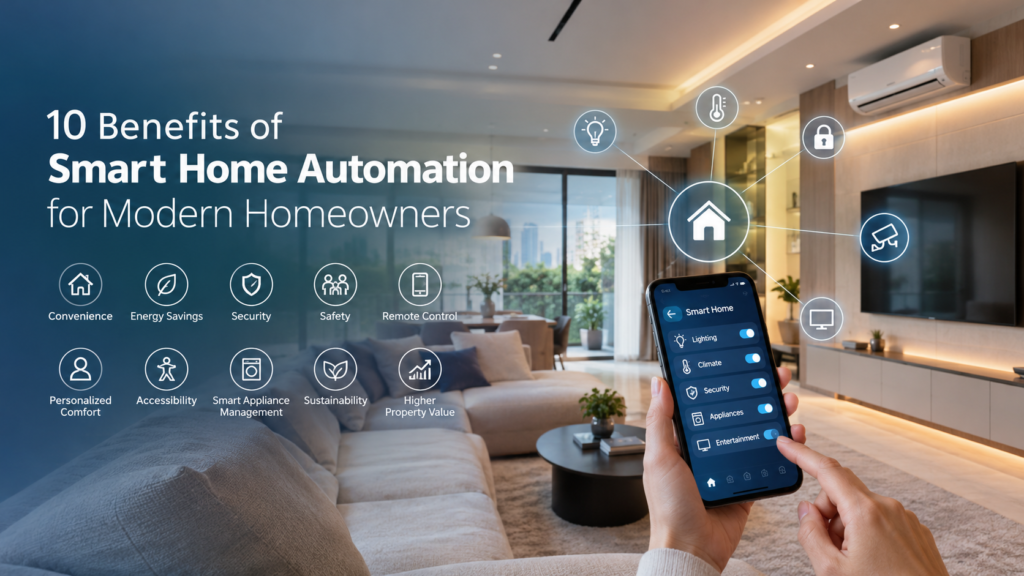
Here are 10 key benefits of smart home automation and how it can improve your lifestyle.
1. Greater Convenience and Time Savings
Smart home automation simplifies everyday tasks by allowing you to control multiple devices from one interface. You can switch off lights, adjust air conditioning, close motorized curtains, and activate security settings with a single command.
Automated routines, such as morning and bedtime scenes, reduce the need for manual operation and make daily living more convenient.
2. Lower Energy Bills
Smart home automation helps reduce unnecessary electricity consumption through scheduled lighting, occupancy sensors, and intelligent climate control.
A smart home lighting system can automatically switch off lights in unoccupied rooms and adjust brightness according to your needs. Automated air conditioning schedules can also help prevent energy waste when rooms are not in use.
These features support more efficient energy management and may help lower household electricity bills.
3. Improved Home Security
Protect your home with integrated smart locks, security cameras, video doorbells, motion sensors, and alarm systems. Receive notifications when unusual activity is detected and monitor your property remotely through compatible applications.
You can also create Away Mode routines that activate security devices and control selected lights when you leave home, providing greater peace of mind.
4. Enhanced Safety for Family and Property
Smart safety devices can help detect potential hazards before they become serious problems. Smoke detectors, carbon monoxide alarms, and water-leak sensors can provide alerts when abnormal conditions are detected.
For example, a water-leak sensor near a washing machine can notify you of a leak, allowing you to respond quickly and reduce potential damage.
5. Remote Control From Anywhere
Manage your home even when you are away. With a compatible smart home system, you can switch lights on or off, adjust temperature settings, check security cameras, and control supported devices using your smartphone.
Remote access makes it easier to manage your home while travelling, at work, or away for the day. Internet connectivity and compatible services may be required for these features.
6. Personalized Comfort
Create customized scenes that match your daily routines and preferences. A Movie Night scene can dim the lights and close the curtains, while a Good Morning scene can activate selected lights and adjust other connected devices.
By integrating lighting, climate control, and motorized curtains, smart home solutions create a personalized living environment that adapts to your lifestyle.
7. Better Accessibility and Independent Living
Smart home automation can make everyday activities easier for elderly residents and people with limited mobility. Voice commands, centralized controls, and automated lighting reduce the need to operate individual switches manually.
Motion-activated lights can illuminate hallways at night, while compatible emergency alerts and sensors can provide additional support for independent living.
8. Smarter Appliance and Maintenance Management
Compatible smart appliances, plugs, and energy monitors can help homeowners track energy consumption and identify unusual usage patterns. Some connected devices also provide maintenance reminders and fault notifications.
These features improve visibility into household operations and help homeowners manage equipment more effectively.
9. Eco-Friendly and Sustainable Living
Smart home automation supports sustainable living by reducing unnecessary energy use. Occupancy-based lighting, scheduled climate control, and intelligent energy monitoring help households use electricity more efficiently.
A well-designed smart home lighting system can combine dimming, scheduling, and sensor-based control to provide suitable lighting while minimizing waste.
10. Increased Property Value and Buyer Appeal
Modern homebuyers may appreciate properties equipped with convenient lighting control, integrated security, climate management, and other automation features.
A professionally installed smart home system can enhance the overall living experience and make a property more appealing to buyers who value technology, comfort, and energy efficiency. However, the impact on resale value depends on market conditions and buyer preferences.
How to Get Started With Smart Home Automation
Getting started does not require automating your entire home at once. Follow these steps to build a system that suits your needs.
- Identify your priorities: Decide whether lighting, climate control, security, or entertainment is most important.
- Choose compatible technology: Consider your existing devices, preferred control method, and future expansion plans.
- Plan your lighting: Select suitable switches, dimmers, sensors, and control protocols for your smart home lighting system.
- Secure your network: Use strong passwords, enable two-factor authentication where available, and keep devices updated.
- Consult an experienced provider: Professional planning can help ensure compatibility, reliable operation, and effective integration.
For homeowners exploring smart home solutions Singapore, choosing a provider experienced in lighting control and building automation can help create a system tailored to the property and its requirements.
Frequently Asked Questions
Is smart home automation expensive?
Costs depend on the devices, property size, and level of integration. You can begin with essential functions and expand your system gradually as your needs and budget allow.
Do smart homes work without the internet?
Some systems support local control and programmed automation without internet access. However, remote access and certain cloud-based features usually require an internet connection.
Are smart homes secure?
Smart homes can be protected by using strong passwords, regular software updates, secure networks, and trusted devices. Security also depends on correct installation and configuration.
What is the best first smart home device?
Smart lighting is a practical starting point for many homeowners because it offers convenient scheduling, dimming, and scene control. The best choice depends on your priorities and existing electrical setup.
Are wired or wireless smart home systems better?
Wireless systems can be convenient for existing homes, while wired systems may be suitable for new builds and major renovations. The best option depends on installation requirements, reliability, compatibility, and future expansion plans.
Conclusion
Smart home automation offers practical benefits, including greater convenience, improved security, personalized comfort, and more efficient energy management. From automated lighting to integrated climate and security control, the right technology can transform the way you interact with your home.
Whether you are planning a new installation or upgrading an existing property, carefully selected smart home solutions can help create a comfortable, efficient, and future-ready living environment.
Explore JIP Technology’s smart home automation solutions to discover how intelligent lighting control and integrated automation can make your home work smarter.
