
Introduction
Imagine your lights switching on automatically when you arrive home, dimming when you watch a movie, and turning off when a room is empty. This is the convenience of smart lighting automation.
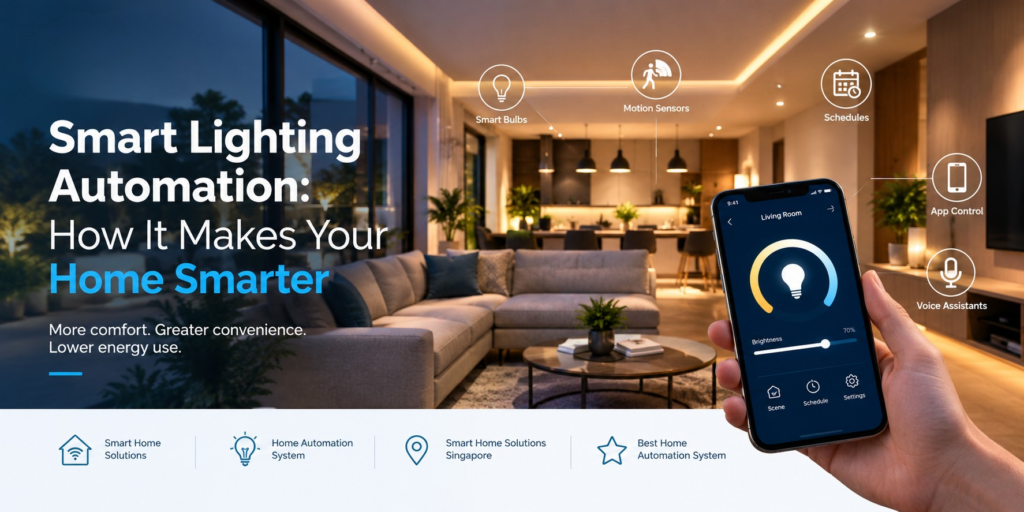
Smart lighting automation allows you to control lighting using smart switches, dimmers, sensors, smartphone apps, and voice assistants. By adjusting lighting according to your daily routine, occupancy, and natural daylight, you can create a more comfortable, convenient, and energy-efficient home.
As demand for smart home solutions continues to grow, intelligent lighting has become an essential feature of modern homes.
What Is Smart Lighting Automation?
Smart lighting automation uses connected devices and intelligent controls to manage your home’s lighting automatically. Unlike traditional lighting, which requires manual operation, automated lighting responds to schedules, sensors, and predefined settings.
A smart lighting system may include:
- Smart switches and dimmers: Control lighting circuits and adjust brightness.
- Motion and occupancy sensors: Switch lights on when an area is occupied and off when it becomes vacant.
- Daylight sensors: Adjust artificial lighting according to available natural light.
- Smartphone apps and voice assistants: Allow convenient lighting control from compatible devices.
- Lighting scenes and schedules: Automate lighting for different activities and times of day.
Whether you want to automate a single room or integrate lighting throughout your property, the right home automation system can make everyday living simpler.
How Smart Lighting Makes Your Home Smarter
Smart lighting offers more than remote control. It allows different lighting functions to work together according to your lifestyle.
Remote and Voice Control
Control your lights using a smartphone app or compatible voice assistants such as Amazon Alexa, Google Assistant, and Apple Siri. You can switch lights on or off, adjust brightness, and activate lighting scenes without operating individual switches.
Automatic Lighting Control
With sensors and programmed schedules, your lights can respond automatically to everyday activities.
For example, entrance lights can switch on after sunset, hallway lights can activate when motion is detected at night, and selected lights can turn off when everyone leaves home.
Personalised Lighting Scenes
Create customised lighting scenes for different occasions. A movie scene can dim the living room lights, while a reading scene provides suitable brightness for focused activities. You can also schedule bedroom lighting to brighten gradually in the morning or dim in the evening.
Integration with Other Smart-Home Systems
Smart lighting can work with compatible security systems, motorised blinds, climate control, and other connected devices. This integration helps create a more coordinated and convenient home environment.
How Smart Lighting Improves Comfort and Saves Energy
Intelligent lighting helps you create the right atmosphere while reducing unnecessary electricity consumption.
Improved comfort: Adjust brightness and colour temperature according to your activities, from bright task lighting in the kitchen to warm, dimmed lighting in the living room.
Reduced energy waste: Motion sensors and occupancy detection help prevent lights from remaining on unnecessarily.
Daylight optimisation: Compatible lighting controls can dim artificial lights when sufficient natural daylight is available.
Automated schedules: Set lighting to operate according to your daily routine, sunrise, or sunset.
Convenient night-time lighting: Motion-activated lights can illuminate hallways and bathrooms at a lower brightness during the night.
Actual energy savings depend on your lighting equipment, household habits, and automation settings. Combining energy-efficient LED lighting with properly configured controls can help improve overall efficiency.
Smart Lighting Ideas for Every Room
Smart lighting can be customised to suit the purpose of each space.
| Area | Smart Lighting Application |
| Living room | Create scenes for entertainment, relaxation, and everyday activities. |
| Bedroom | Automate morning lighting and bedtime dimming. |
| Kitchen | Combine bright task lighting with softer evening illumination. |
| Hallways | Use motion sensors to activate lights when needed. |
| Bathroom | Install suitable motion-activated night lighting. |
| Entrance and porch | Schedule lights around sunset and arrival times. |
| Garden and outdoor areas | Automate selected lights for convenience and visibility. |
These applications make lighting more responsive to your needs while reducing the effort required for everyday control.
Choosing the Right Home Automation System
Selecting the right lighting solution depends on your property, existing electrical infrastructure, budget, and future requirements.
Smart bulbs may suit smaller installations, while smart switches and dimmers provide control over compatible lighting circuits. For larger homes, an integrated lighting control system can coordinate multiple circuits, sensors, and lighting scenes through a centralised platform.
Before choosing a system, consider:
- Compatibility with your existing smart-home devices.
- Support for your preferred platform, such as Apple Home, Google Home, or Alexa.
- Integration requirements for technologies such as KNX, Zigbee, or Matter.
- The availability of suitable dimmers, sensors, and lighting drivers.
- Reliability, maintenance, and future expansion.
For homeowners exploring smart home solutions Singapore, professional planning can help ensure that lighting controls integrate effectively with the property’s wider automation requirements.
The best home automation system is one that meets your needs, provides reliable control, and can adapt as your requirements change.
Why Choose JIP Technology for Smart Lighting Automation?
At JIP Technology, we provide smart-home and building automation solutions designed to improve convenience, control, and energy efficiency.
Our expertise includes intelligent lighting control and integration with compatible automation technologies. From lighting scenes and dimming to sensor-based automation and integrated control systems, we help create solutions tailored to the requirements of each project.
Whether you are upgrading an existing property or planning a new installation, the right lighting control strategy can make your home more comfortable, efficient, and connected.
Conclusion
Smart lighting automation transforms everyday lighting into an intelligent system that responds to your lifestyle. With automated schedules, occupancy sensors, personalised scenes, and integrated controls, you can improve comfort, simplify daily routines, and reduce unnecessary energy consumption.
Start with one room, introduce a few useful automation routines, and expand as your needs evolve.
Ready to make your home smarter? Contact JIP Technology to explore smart lighting automation and integrated smart-home solutions tailored to your needs.
